Run several coding agents without becoming the bottleneck.
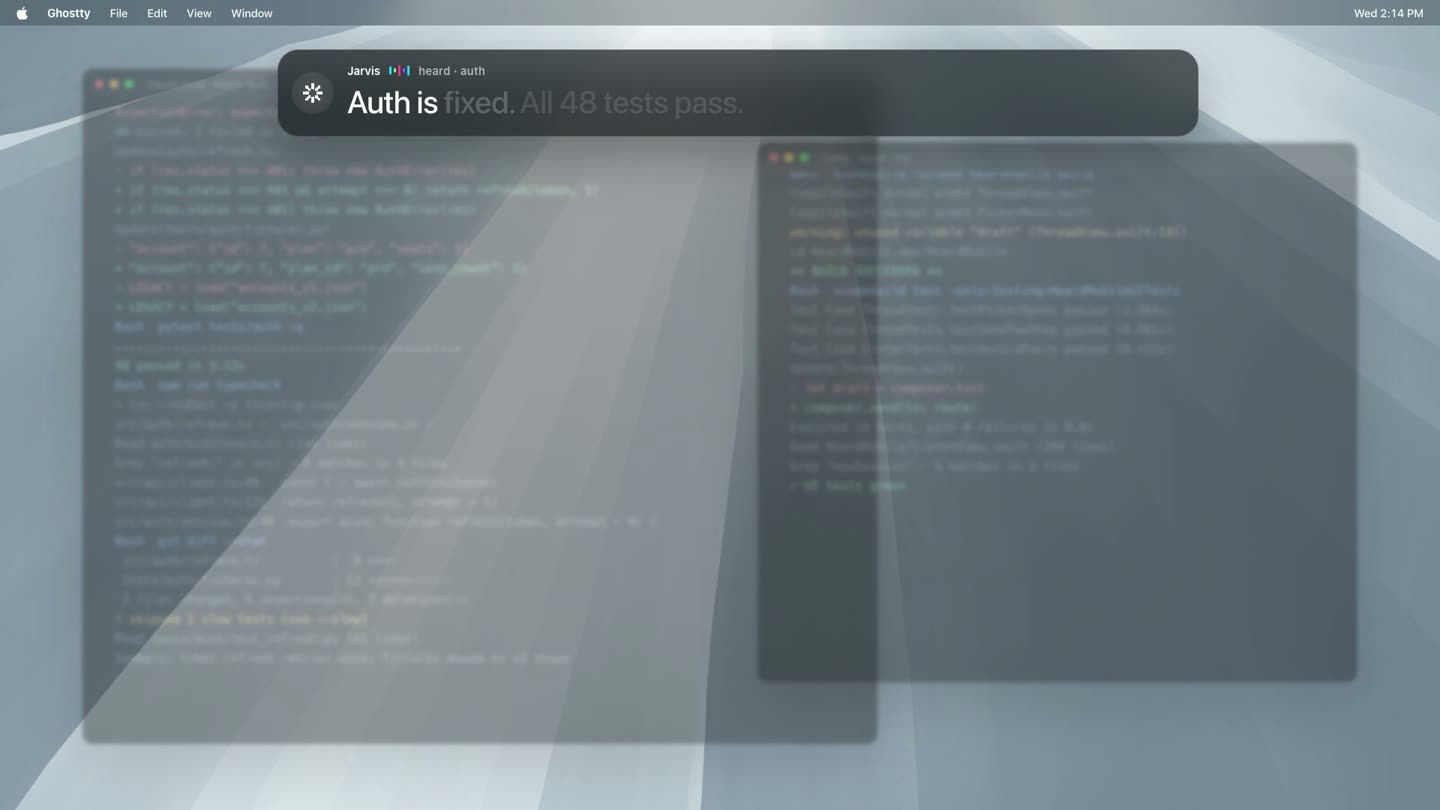
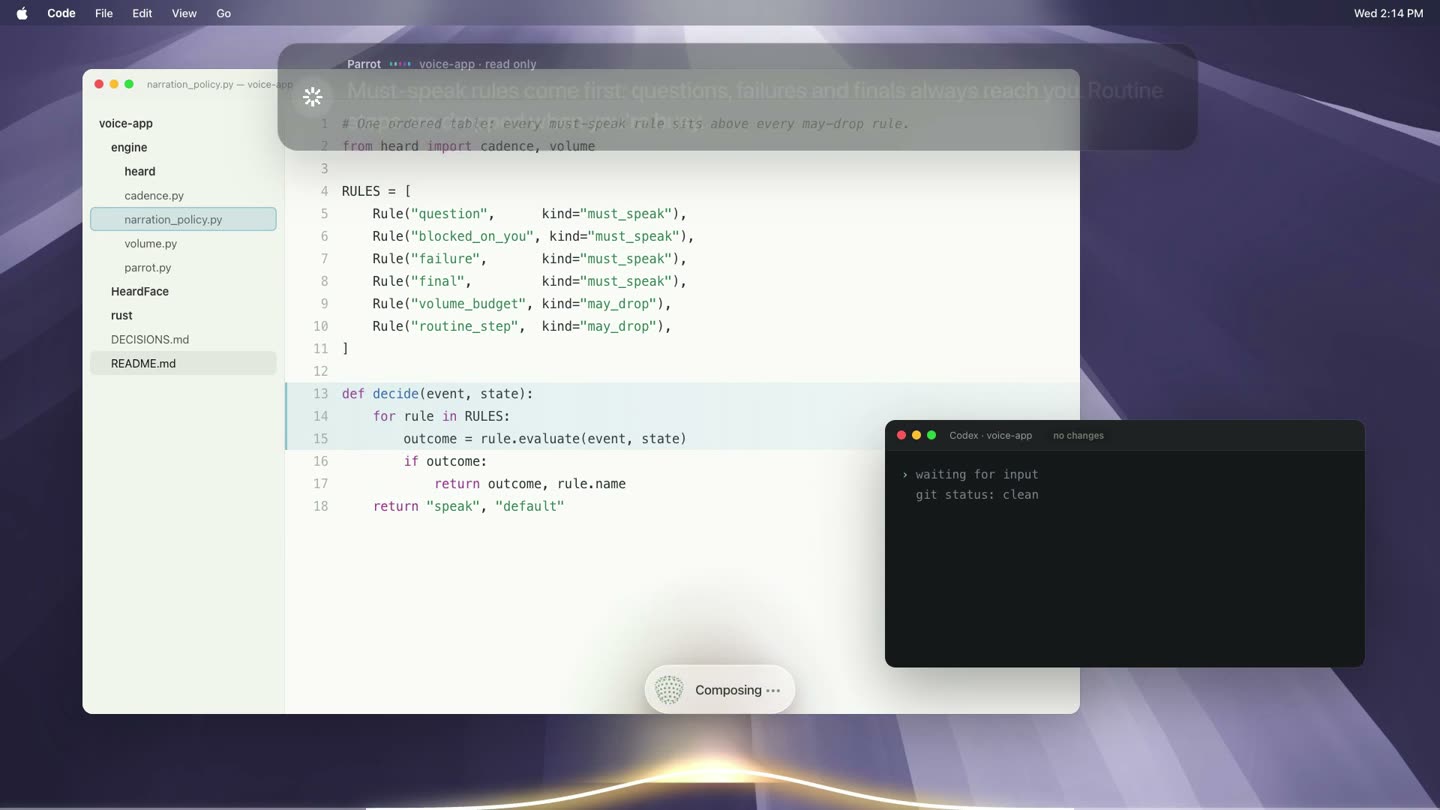
Heard gives parallel sessions distinct context and speaks the events that deserve your attention, so more agents do not automatically mean more window management.
Claude Code + Codex · Session-aware narration · Talk back on Power
(1)The short answer
The problem with parallel agents is attention routing, not concurrency.
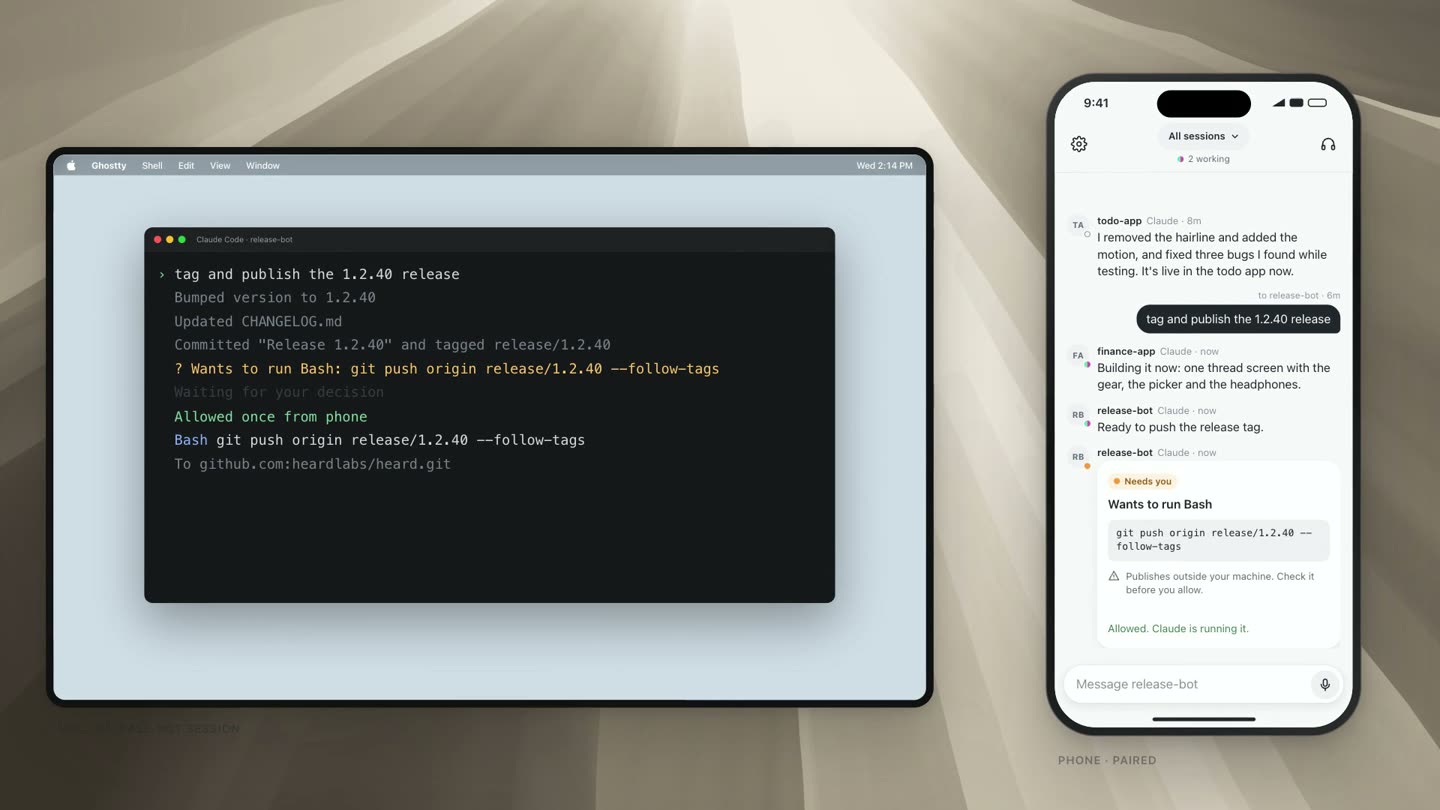
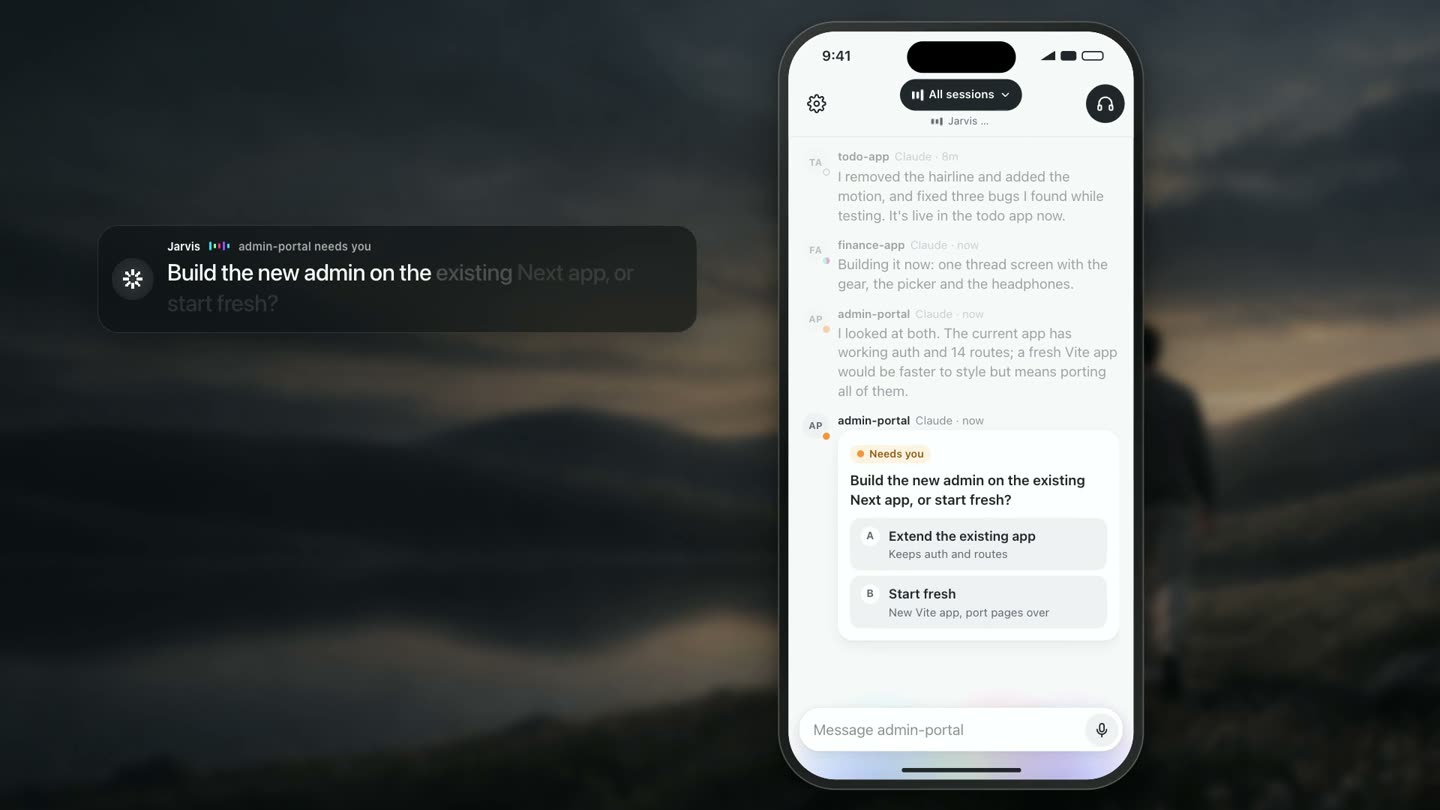
Adding agents is easy. Knowing which one is waiting, blocked, failing, or finished is the hard part. Heard turns each supported session into a spoken operational stream and prioritizes intervention points over routine activity.
The strongest setup gives every agent a narrow task, a distinct working directory, explicit completion checks, and a name you can recognize when it is spoken.
01
One attention queue
Questions and failures surface across sessions without manual polling.
02
Recognizable context
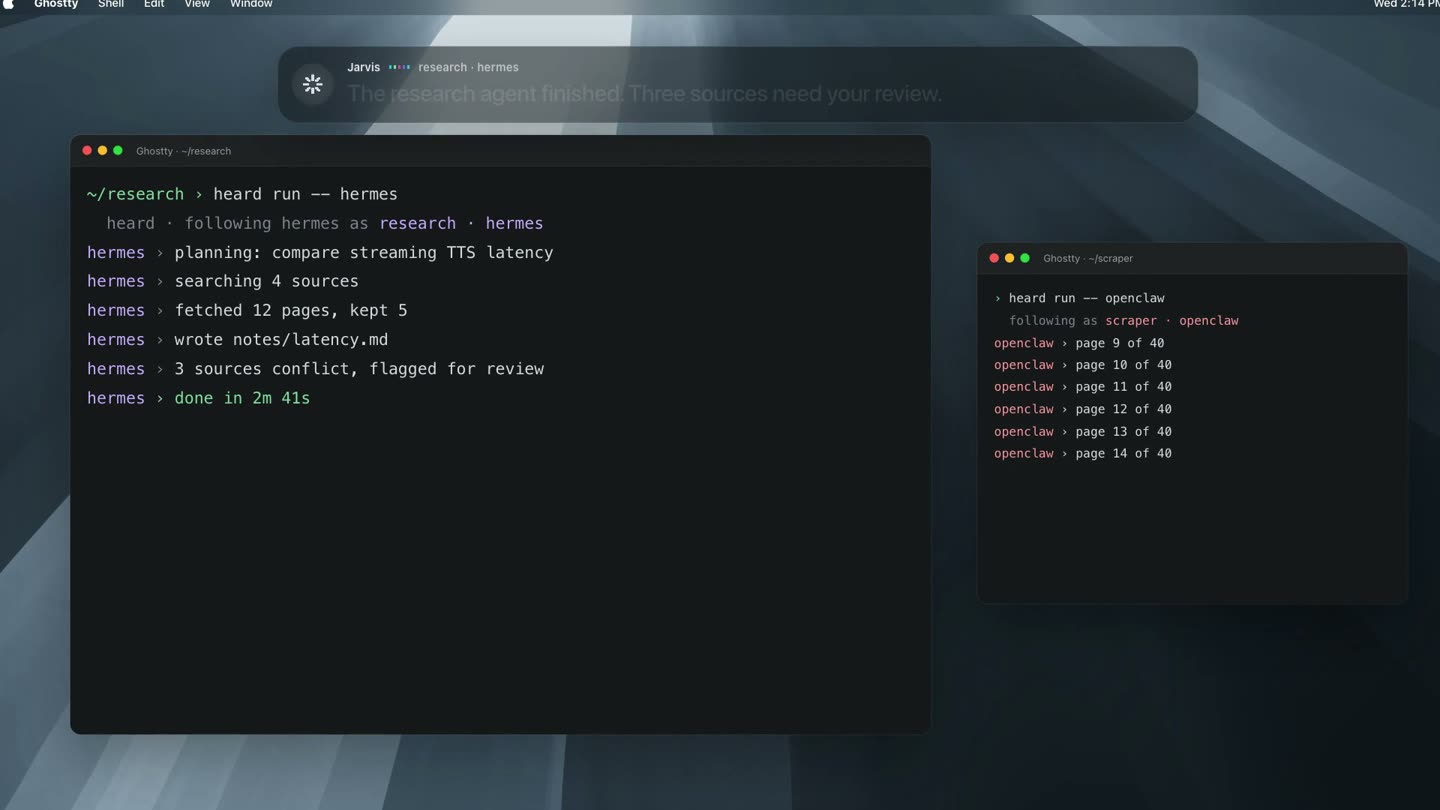
Hear which session and task an update belongs to.
03
Fewer collisions
Clear scope and separate workspaces make parallel work easier to review.
(2)Architecture
Give every agent a bounded lane.
Parallelism works when tasks can proceed independently. Split work by route, component, test surface, or research question; avoid assigning several agents to the same files unless one is reviewing rather than editing.
Heard helps with awareness, but task isolation is what prevents merge conflicts and duplicated decisions.
Name each session after its deliverable, not the tool running it.
State which files or subsystem the agent owns.
Give each task a concrete verification command or acceptance test.
(3)Attention
Prioritize questions, failures, and completions.
A useful multi-agent voice layer should not read every token. Heard listening modes control how much is spoken, while session context keeps an urgent failure from blending into background progress.
(4)Review
Close each loop before starting another.
When an agent reports completion, review its diff and checks, record the result, then release that attention slot. Treat “finished speaking” as a request for review, not an automatic acceptance signal.
How it works
A repeatable parallel-agent operating loop
01
Partition
Create independent tasks, working areas, and acceptance criteria.
02
Launch and label
Start supported sessions and make their names recognizable in speech.
03
Respond and reconcile
Handle exceptions, then review and integrate each completed result.
Native
Claude Code + Codex CLI
Agent event adapters.
Observed locally
Codex desktop
Follows local session activity.
Terminal workspaces
cmux + Ghostty
Hosts for supported agents, not separate adapters.
Parallel agents
Questions, answered.
Can Heard follow more than one agent at a time?
Yes. Heard is designed to preserve session context and surface important events across parallel supported sessions.
Does Heard prevent two agents from editing the same file?
No. Use separate worktrees or carefully partitioned file ownership. Heard improves awareness; it is not a source-control lock.
Which listening mode is best for many agents?
Co-pilot or Focus is usually more useful as session count grows. Co-pilot keeps routine progress short, and Focus speaks only at intervention points.