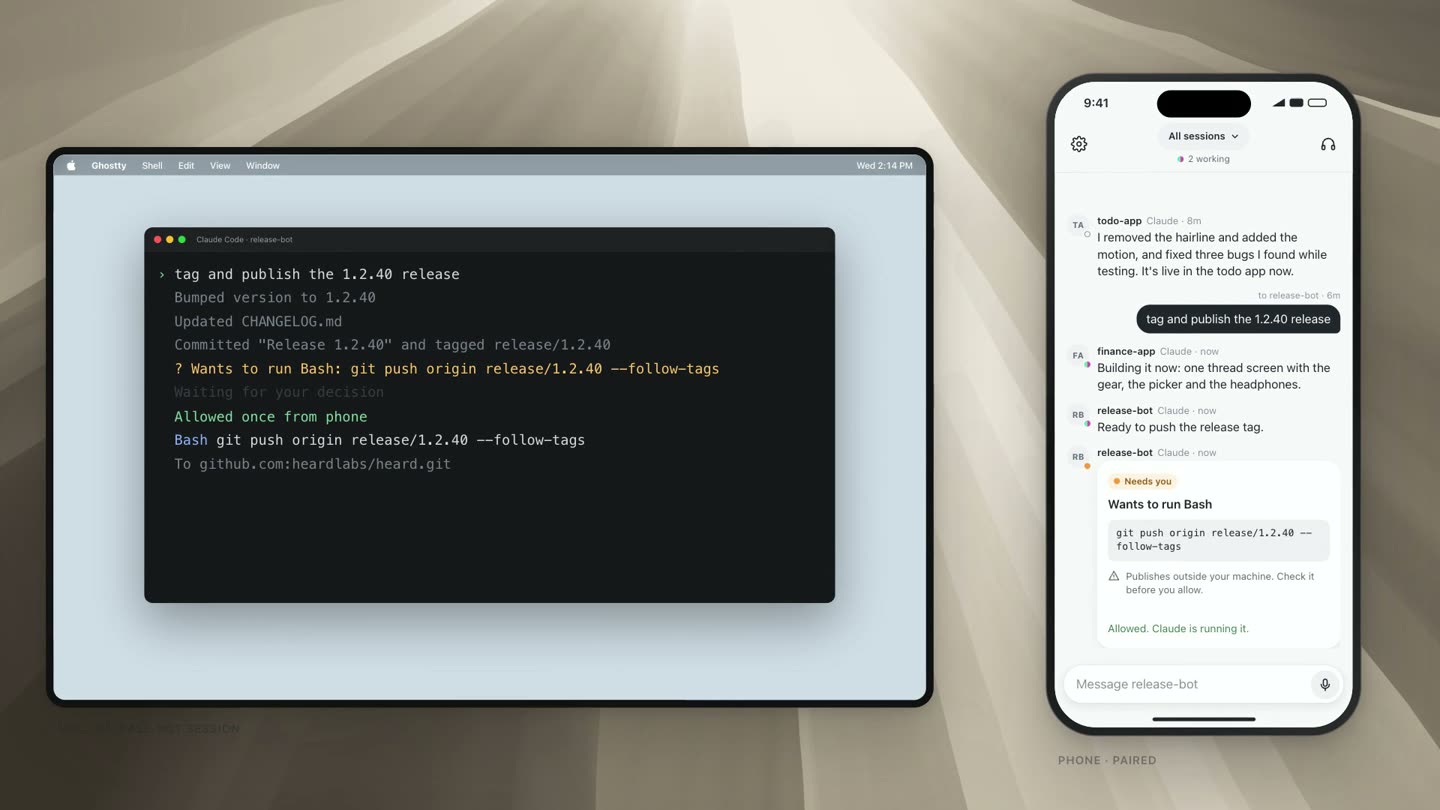
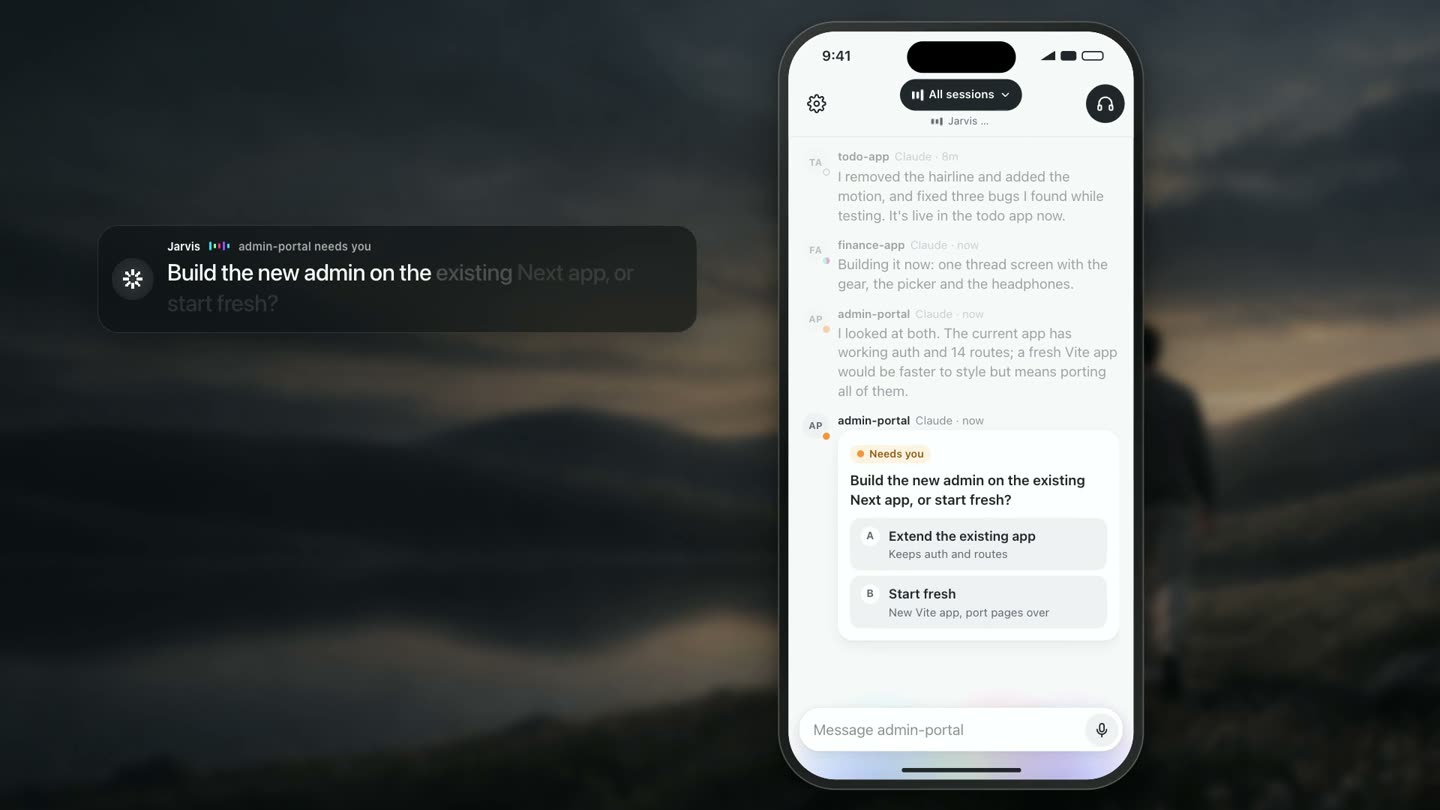
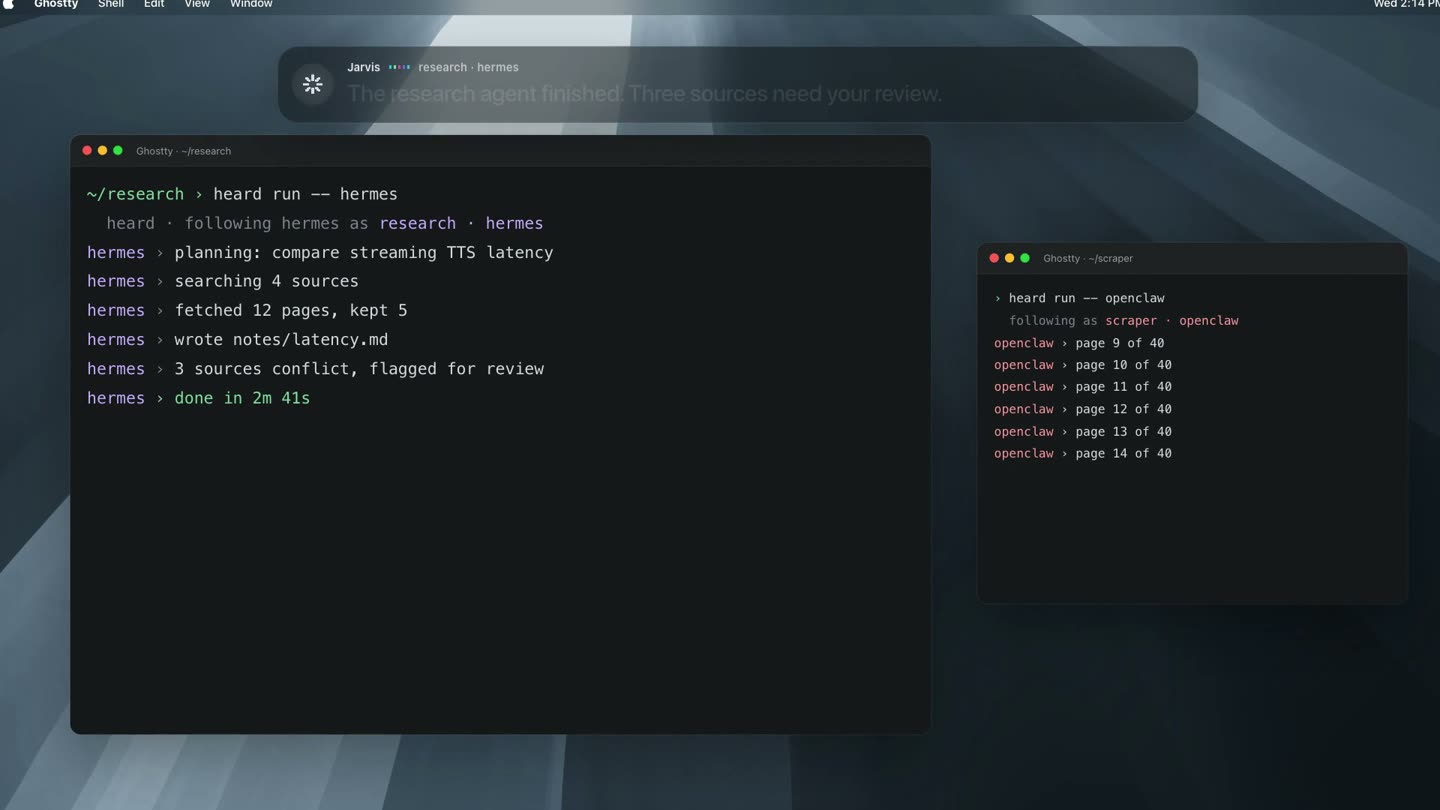
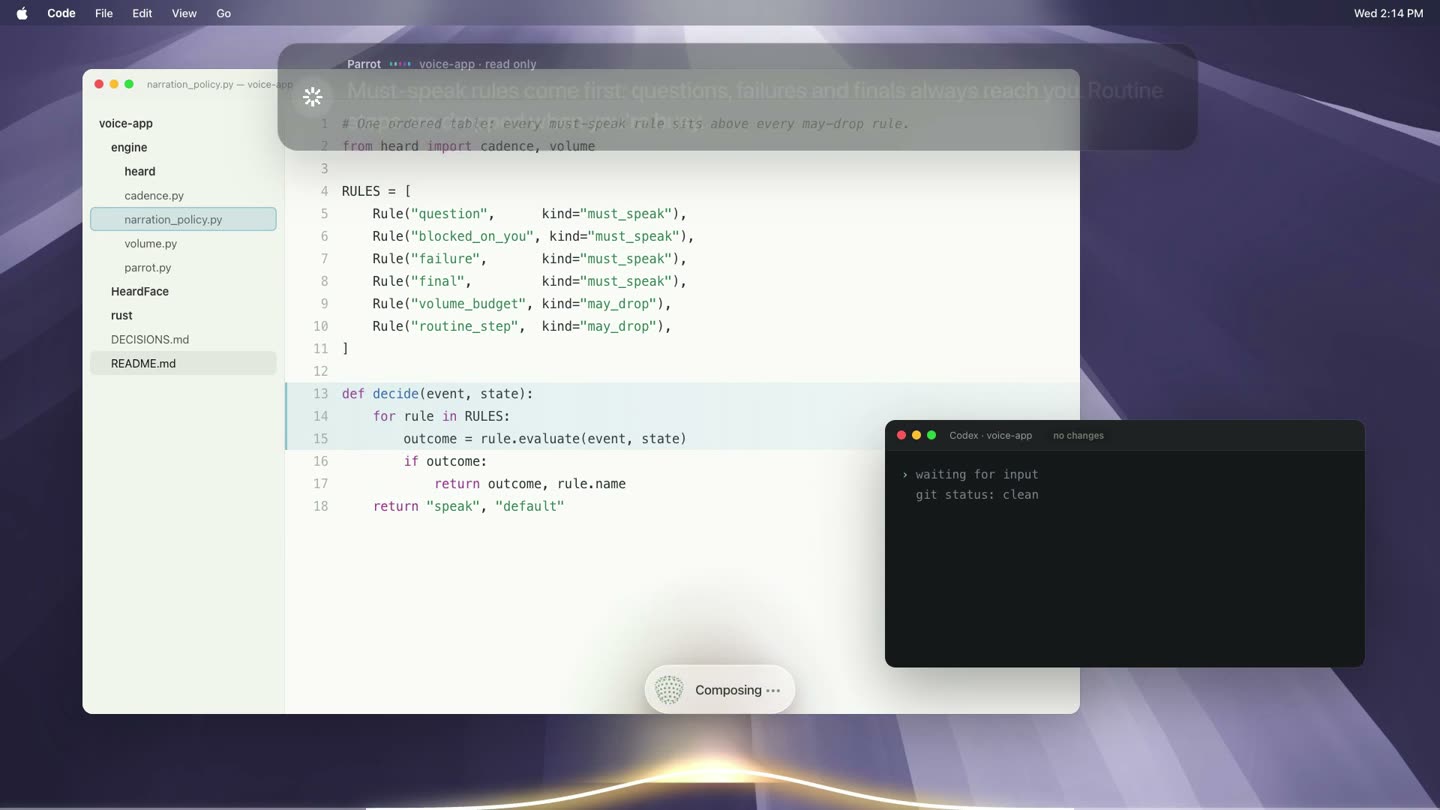
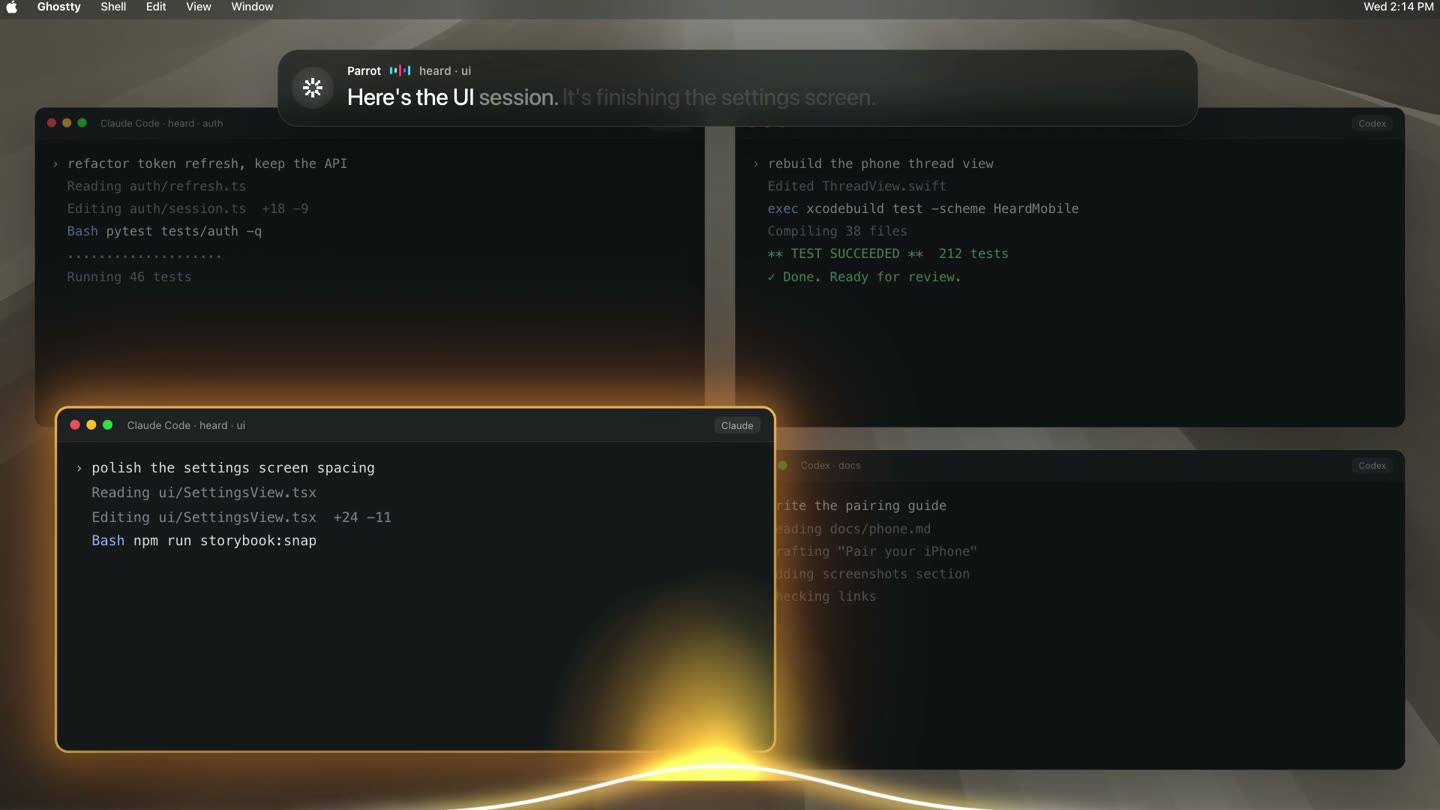
Move routine agent monitoring from dense text into speech.
Heard can reduce repeated scanning across terminals by narrating important coding-agent events. It complements the visual tools and review practices that already work for you.
Optional voice layer · Adjustable listening modes · Local open source voice option
(1)The short answer
Heard can make agent supervision less text-heavy without pretending speech replaces code.
Coding agents generate long streams of status text. Heard extracts the progress, decisions, blockers, test results, and completion signals that are useful to hear, reducing the amount of terminal scanning required to stay oriented.
People experience dyslexia differently. Treat the voice layer as a configurable option: choose a voice and pace that remain comfortable, reduce verbosity when it becomes tiring, and keep exact code and command review in the tools that work best for you.
01
Less scanning
Move recurring status checks into concise spoken updates.
02
Another modality
Pair speech with visual code, diffs, and test evidence.
03
User control
Choose listening depth and hosted or local voice paths.
(2)Configuration
Tune for comprehension, not maximum narration.
Start with Co-pilot mode and a moderate speaking rate. Add more detail only when the summaries omit something you consistently need. Continuous narration can become another source of overload, so the goal is the smallest useful stream.
Use stable session names that are easy to distinguish when spoken.
Keep questions and failures prominent.
Pair audio with a final visual diff and test review.
(3)Choice
Use local speech when data routing matters.
The open source engine supports local Kokoro text-to-speech. Managed voices are available in the desktop app. Review the privacy and data page to choose the path that fits your workflow and organization.
(4)Scope
An accessibility aid, not a clinical claim.
Heard is productivity software and is not a medical device or a treatment for dyslexia. The value is practical: it gives builders an additional way to consume repetitive agent status information.
How it works
Find a listening setup that works for you
01
Start narrow
Enable one agent session and use Co-pilot mode for a familiar task.
02
Tune the stream
Adjust voice, pace, and listening depth around comprehension and fatigue.
03
Keep exact review
Inspect code, diffs, commands, and tests visually before accepting changes.
Dyslexic builders
Questions, answered.
Was Heard designed as a dyslexia treatment?
No. Heard is productivity software. Some dyslexic builders may find an optional spoken layer useful for reducing repetitive terminal scanning.
Can I use a local voice?
Yes. The open source engine supports local Kokoro text-to-speech, while the managed app also offers hosted voice options.
Does voice replace reading code?
No. Spoken status is useful for orientation and intervention. Exact code, diffs, commands, and evidence still need appropriate review.