A shared operating model for agent-heavy engineering work.
Heard helps individual developers notice what needs attention. Team value comes from pairing that voice layer with clear task boundaries, review requirements, and data controls.
Team plan · Centralized administration · Native Claude Code and Codex support
(1)The short answer
Teams should standardize the operating rules before standardizing the voice.
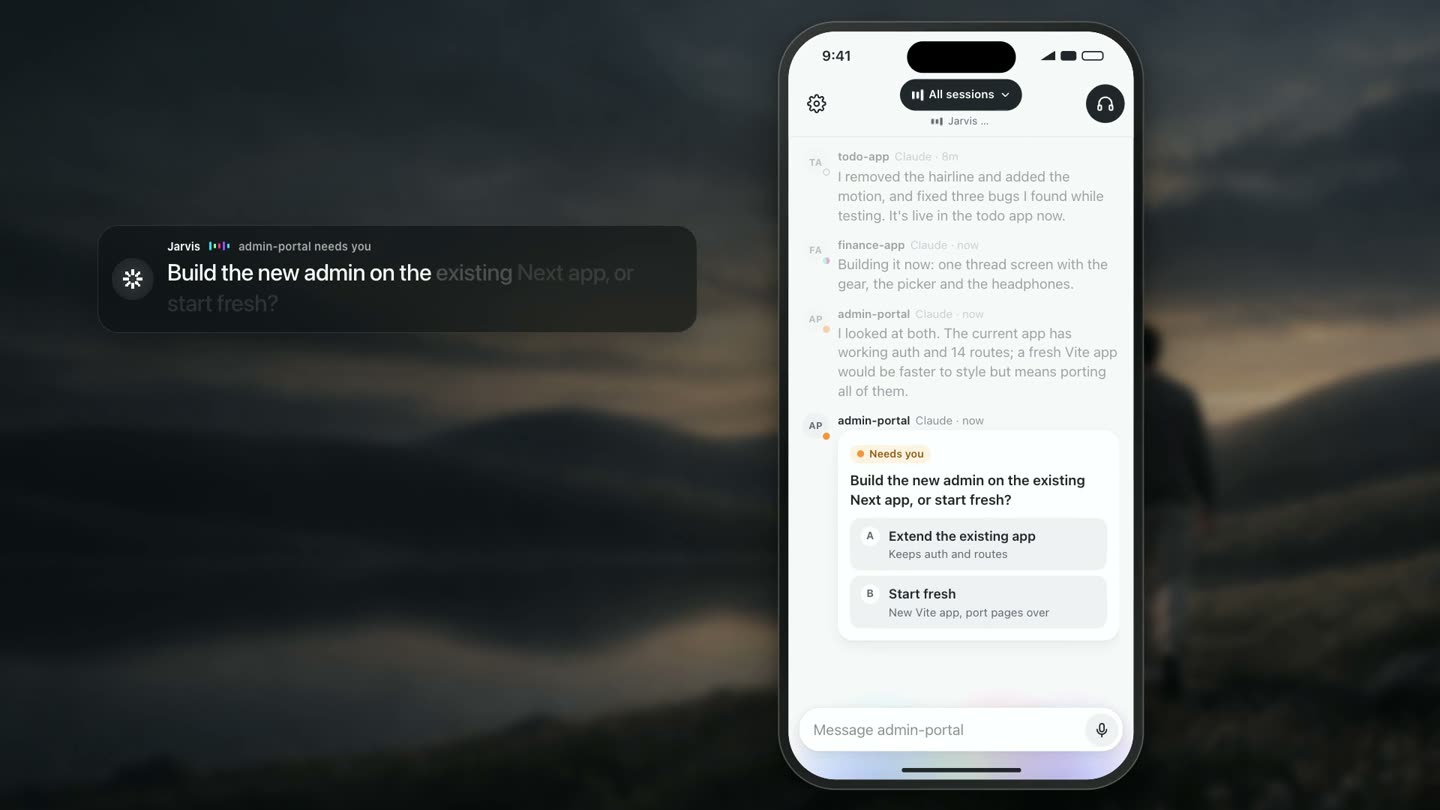
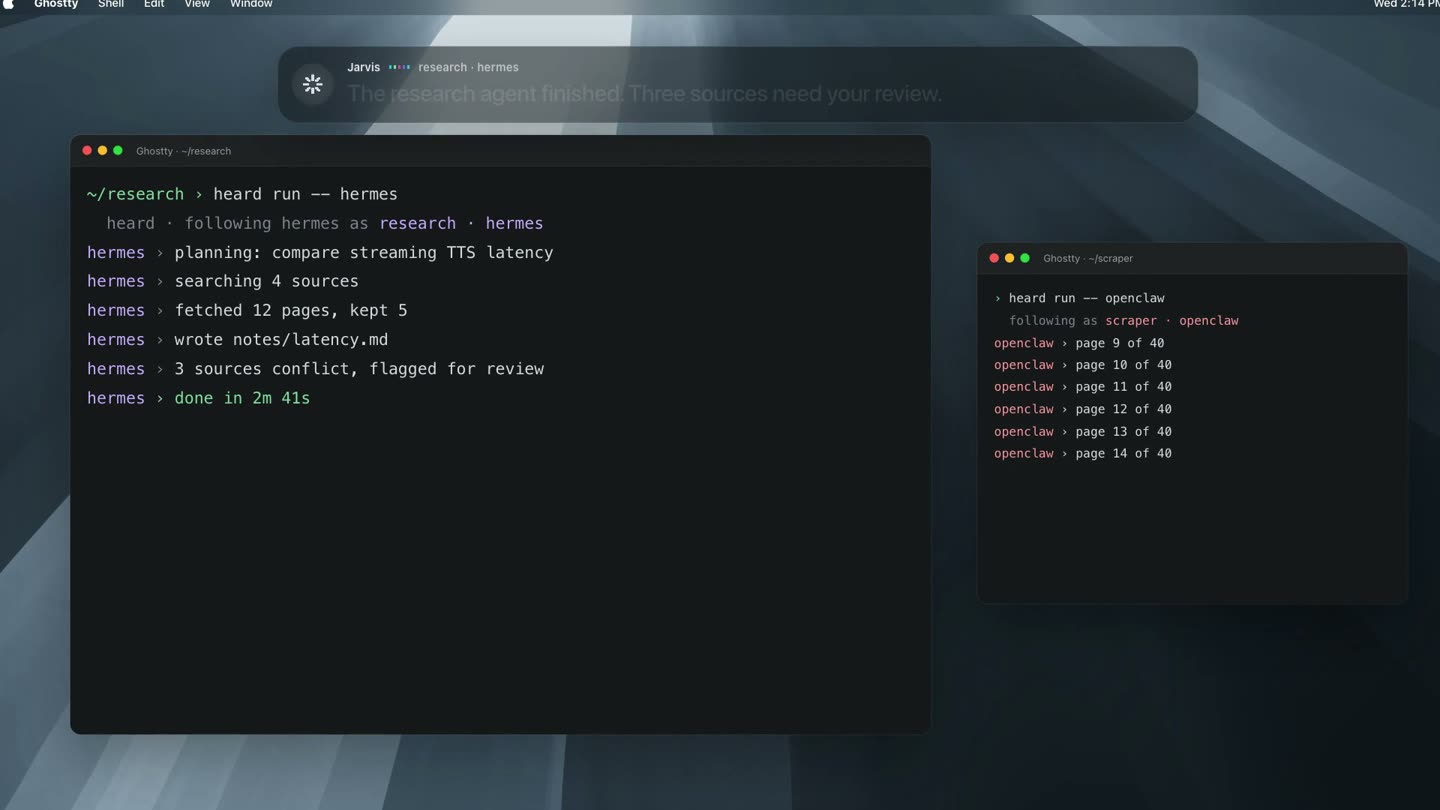
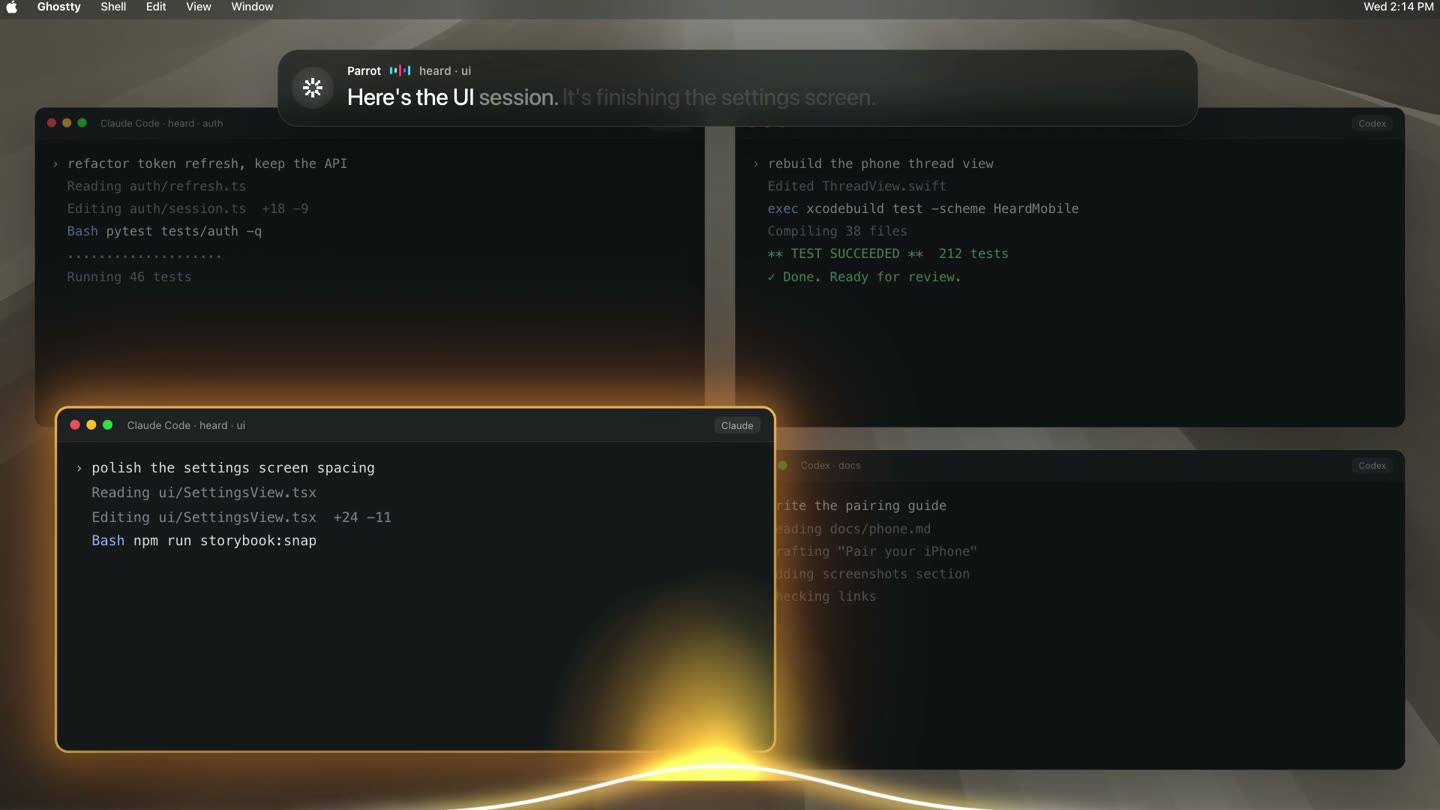
Heard can make questions, failures, approvals, and completion easier to notice across an agent-heavy day. It does not replace task ownership, code review, security controls, or deployment gates.
A responsible rollout starts with a small group, approved integrations, a documented local-versus-hosted voice policy, and measurable outcomes such as fewer missed blockers or less time spent polling long-running jobs.
01
Consistent alerts
Developers use the same hierarchy for progress and intervention points.
02
Documented controls
The team knows which processing path and integrations are approved.
03
Measured rollout
Adoption expands only after the workflow proves useful.
(2)Pilot
Start with one team and two repeatable workflows.
Choose work that is already well-instrumented: test suites, dependency updates, migrations, or bounded refactors. Define the exact moments developers should hear and the evidence required at completion.
(3)Policy
Publish the data and review model.
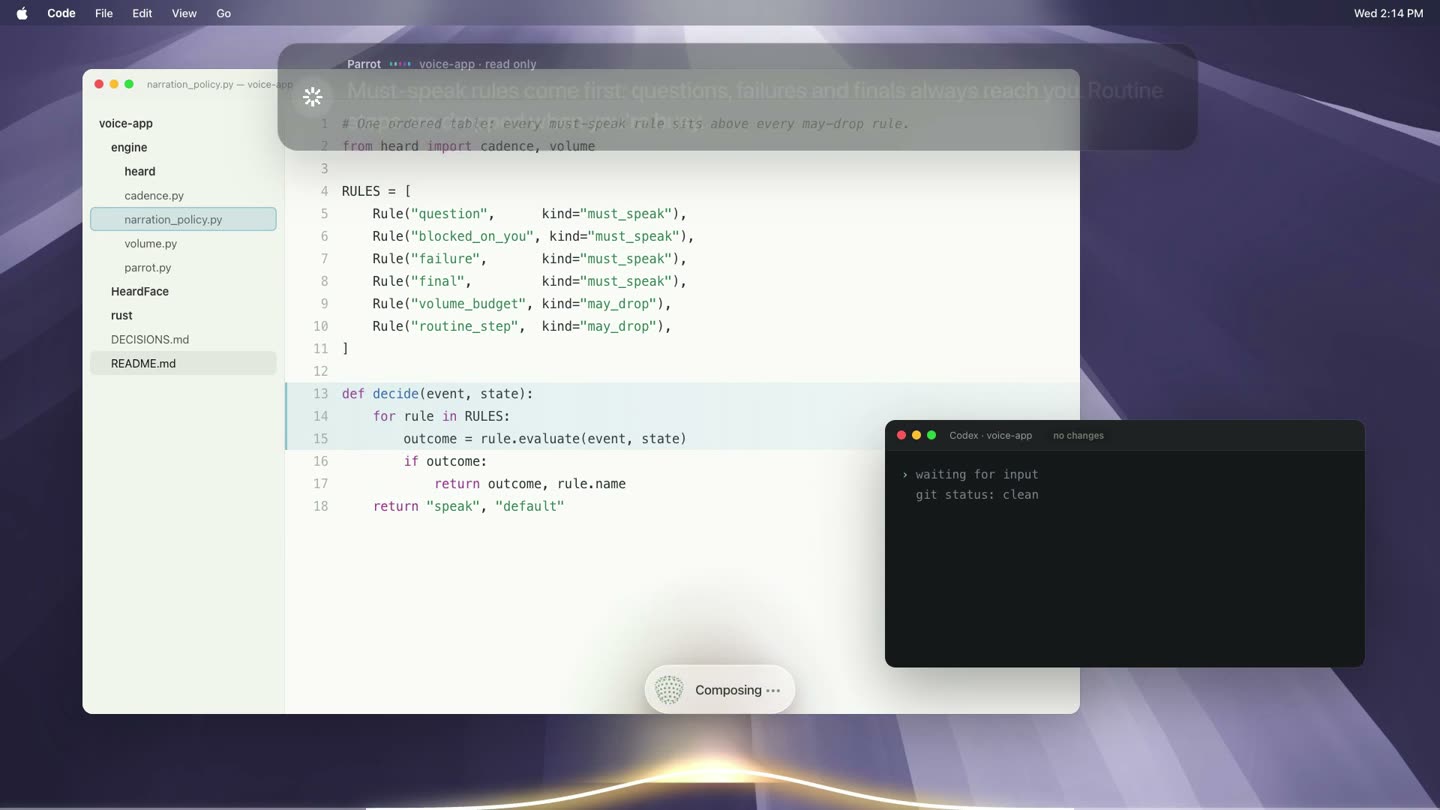
Document when local voices are required, when managed voices are allowed, which agent integrations are approved, and which changes always require direct visual supervision. Link the policy from onboarding rather than leaving it implicit.
No production or destructive operation based on narration alone.
No merge without the organization’s normal review and CI controls.
Use the narrowest listening mode that produces a useful signal.
(4)Evaluation
Measure attention saved, not speech generated.
Useful pilot measures include missed intervention events, time-to-response for blocked agents, perceived interruption load, and whether developers keep using the tool after the novelty period. Raw narration volume is not a success metric.
How it works
A controlled team rollout
01
Define
Choose approved workflows, integrations, data paths, and success measures.
02
Pilot
Run with a small group long enough to observe normal and failure cases.
03
Standardize
Document the useful defaults, keep review gates, and expand deliberately.
Team product
Heard for Teams
See current team capabilities and contact Heard.
Supported agents
Claude Code + Codex
Other CLI workflows may use the wrapper.
Security model
Local-first choices
Hosted features should follow team policy.
Engineering teams
Questions, answered.
Does Heard replace code review or CI?
No. Heard is an awareness and response layer. Existing source-control, review, CI, deployment, and security gates remain authoritative.
Can a team require local voices?
The open source engine supports local Kokoro speech. Organizations should document which processing path is approved for each workflow.
How should we evaluate a pilot?
Track missed blockers, response time to agent questions, interruption load, and sustained developer adoption—not the amount of audio produced.